
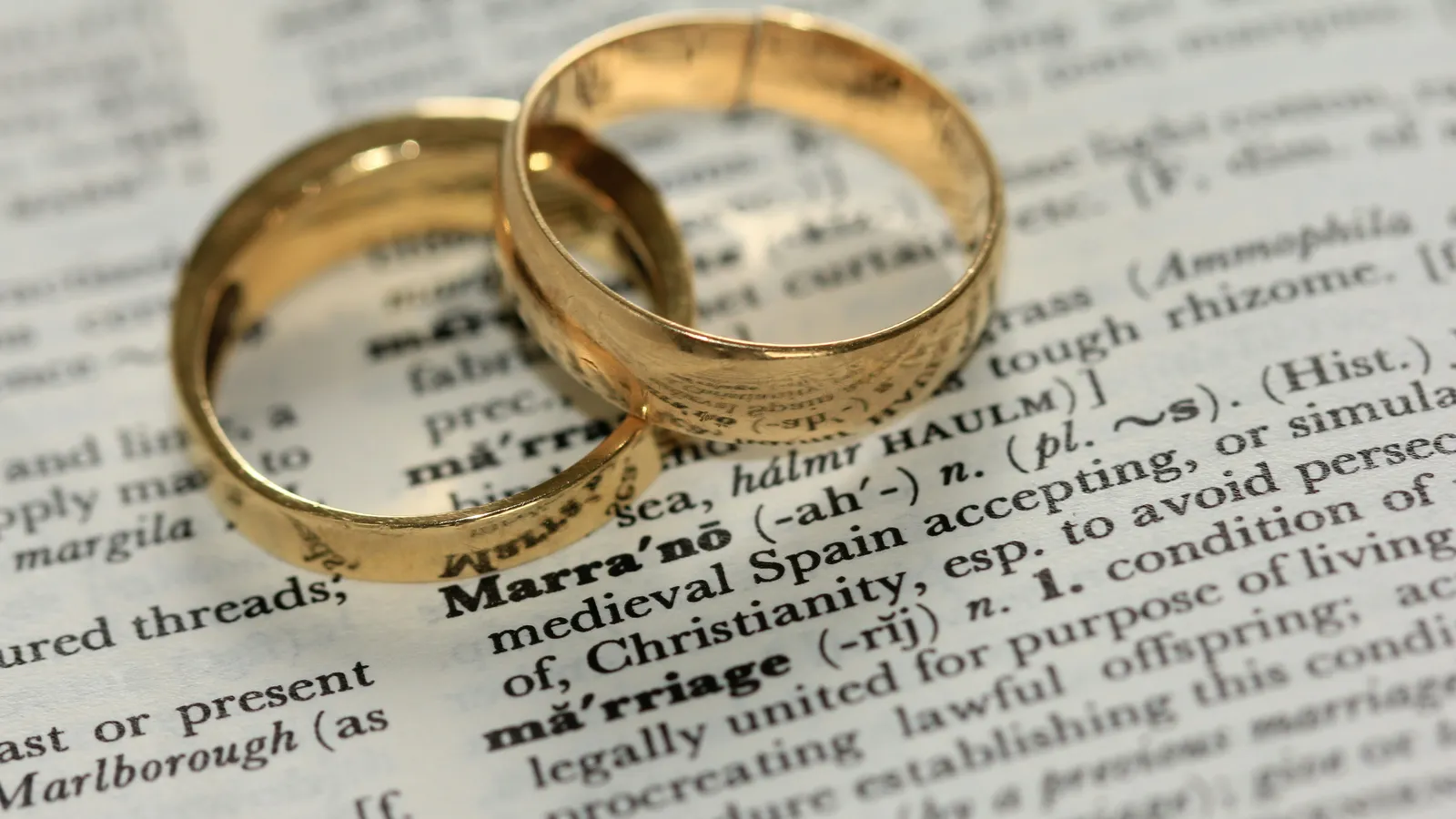
Short answer: In Azerbaijan, if a couple has no common minor children and both spouses agree, the marriage is dissolved at the civil registration authority. If there are minor children or one spouse objects, the divorce goes through court. Where one spouse objects, the court may allow 3 months for reconciliation. A court divorce by mutual consent takes place no earlier than 1 month after the application. Property acquired during the marriage is, as a rule, divided equally. Child support is 1/4 of income for one child, 1/3 for two and 1/2 for three or more.
Two routes to divorce: registration authority or court
Under the Family Code, a marriage may be terminated on the application of one or both spouses (Article 14). The route depends on two questions: are there common minor children, and do both spouses agree?
| Situation | Where the marriage is dissolved | Basis |
|---|---|---|
| No common minor children, both spouses agree | Registration authority | Art. 17.1 |
| The other spouse has been declared missing or legally incapacitated by a court, or sentenced to at least 3 years' imprisonment | Registration authority, on one spouse's application (even with children) | Art. 17.2 |
| There are common minor children | Court | Art. 19.1 |
| One spouse does not agree | Court | Arts. 19.1, 20 |
| Both agree, but one avoids the registration authority | Court | Art. 19.2 |
Key restriction: during the wife's pregnancy and for 1 year after the birth of a child, the husband cannot file for divorce without the wife's consent (Article 15).
How a court divorce works
With mutual consent
Where spouses with minor children both want a divorce, the court dissolves the marriage without examining the reasons, no earlier than 1 month after the application (Article 21). The spouses may submit an agreement on where the children will live, child support and the division of property. If the agreement harms the children's interests, the court decides these issues itself.
Without consent
The marriage is dissolved if the court finds that the spouses can no longer live together and maintain the family. If one spouse objects, the court may postpone the case and set a 3-month reconciliation period. If there is no reconciliation, or a spouse insists, the marriage is dissolved (Article 20).
Issues the court decides in the same judgment
Absent an agreement, the court determines (Article 22):
- which parent the minor children will live with;
- which parent pays child support and how much;
- on request, the division of jointly owned property;
- on request, maintenance for a spouse entitled to it.
If the property division affects third parties (for example a mortgage lender or a company), the court may separate that claim into its own proceedings.
When the marriage ends
- At the registration authority — on the date the divorce is registered;
- In court — on the date the judgment enters into force. An extract is sent to the registration authority immediately via the "Electronic Court" system.
Neither spouse may remarry until the divorce certificate has been issued (Article 23).
Property division: what is and isn't divided
| Joint property (divided) | Separate property (not divided) |
|---|---|
| Income from employment, business and intellectual activity during the marriage | Property owned before the marriage |
| Homes, cars, securities, company shares and deposits bought with common income | Gifts and inheritances received during the marriage |
| Any property acquired during the marriage, regardless of whose name it is in | Personal items (except jewellery) |
- Equal shares: unless a marriage contract says otherwise, the spouses' shares are equal (Art. 37.1).
- Exceptions: the court may depart from equal shares in the children's interests or, for example, where one spouse earned no income without good reason or spent joint property against the family's interests (Art. 37.2).
- Homemaking spouse: a spouse without income because of housekeeping or childcare has equal rights to joint property (Art. 32.3).
- Separate property can become joint: if joint funds substantially increased its value (major renovation, reconstruction), it may be treated as joint (Art. 35).
- Children's items are not divided and go to the parent the children live with; deposits in the children's names belong to the children (Arts. 36.6–36.7).
- Debts are allocated in proportion to the shares (Art. 37.3).
- Time limit: a 3-year limitation period applies to property division claims after divorce (Art. 36.9).
Child support: amounts and rules
Parents may agree on child support. Without an agreement, the court orders monthly payments as follows (Article 76):
| Number of children | Share of earnings and other income |
|---|---|
| 1 child | 1/4 (25%) |
| 2 children | 1/3 (about 33%) |
| 3 or more children | 1/2 (50%) |
- The court may reduce or increase these shares depending on the parties' family and financial circumstances.
- If income is irregular, paid in foreign currency or in kind, or absent, support may be set as a fixed monthly amount, or as a fixed amount plus a share of income (Article 78).
- If children live with each parent, the better-off parent may be ordered to pay a fixed amount to the other.
Preparing for divorce: a practical checklist
- Identify the route: minor children and the other spouse's consent — registration authority or court.
- Gather documents: marriage certificate, children's birth certificates, ID cards.
- List the assets: property extracts, vehicles, bank accounts, company shares, loans — noting which were acquired before and during the marriage.
- Collect income evidence: information on the other parent's income matters for child support.
- Try to agree: a written agreement on children, support and property shortens the process and lowers costs.
- Check for a marriage contract: it may set a property regime different from equal division.
Frequently asked questions
Can we divorce at ASAN or the registry office if we have children?
As a rule, no — with common minor children the divorce goes through court. The exception is where the other spouse has been declared missing or incapacitated, or sentenced to at least 3 years' imprisonment.
What if my spouse refuses to divorce?
The marriage is dissolved in court. The court may allow 3 months for reconciliation; if that fails, the marriage is dissolved.
Can a husband file for divorce while his wife is pregnant?
Not without her consent — during pregnancy and for 1 year after the child's birth.
Is an apartment registered in my name divided too?
If it was bought with common income during the marriage, it is joint property regardless of whose name it is in. Gifts, inheritances and property owned before the marriage are separate.
How long after the divorce can I claim my share of property?
A 3-year limitation period applies to property division claims after the marriage is dissolved.
How is child support calculated if a parent has no official income?
The court can set a fixed monthly amount, aiming to preserve the child's previous standard of living as far as possible.
How we can help
Affidacons provides legal advice and court representation in divorce matters: choosing the right route, drafting claims and settlement agreements, listing and valuing assets, child support claims and dividing complex assets such as company shares and real estate. See our litigation and legal representation services, or contact us.
This article is for general information and is not legal advice. It is based on the Family Code of the Republic of Azerbaijan (Articles 14–23, 32–37, 76–78, including the 2023 amendments), as of October 2026; legislation may change. Obtain advice on your specific situation before making decisions.
Leave a Comment
Leave a Comment
book an appointment